
Shelterbelt removal, topping and lifting, western Bay of Plenty

James and the crew of Bay of Plenty Tree Service. Locally owned and Tauranga-based, working right across the western Bay. Qualified arborist, fully insured.
5.0 on Google from 7 reviews
Cedar or casuarina along the block, old poplar and willow round the older orchards, pine on the farm boundary. We take the row out, top it to a working height, or lift it and cut a gap, next to canopy, a road or the neighbour’s fence.
Free site visit and quote. No travel charge, Maketū to Waihi.
- Rows
- Out, topped or lifted
- Trees
- Fenceline, paddock, windbreak
- Branches
- Chipped and taken away
- Quote
- Free, on your block
Out, topped or lifted
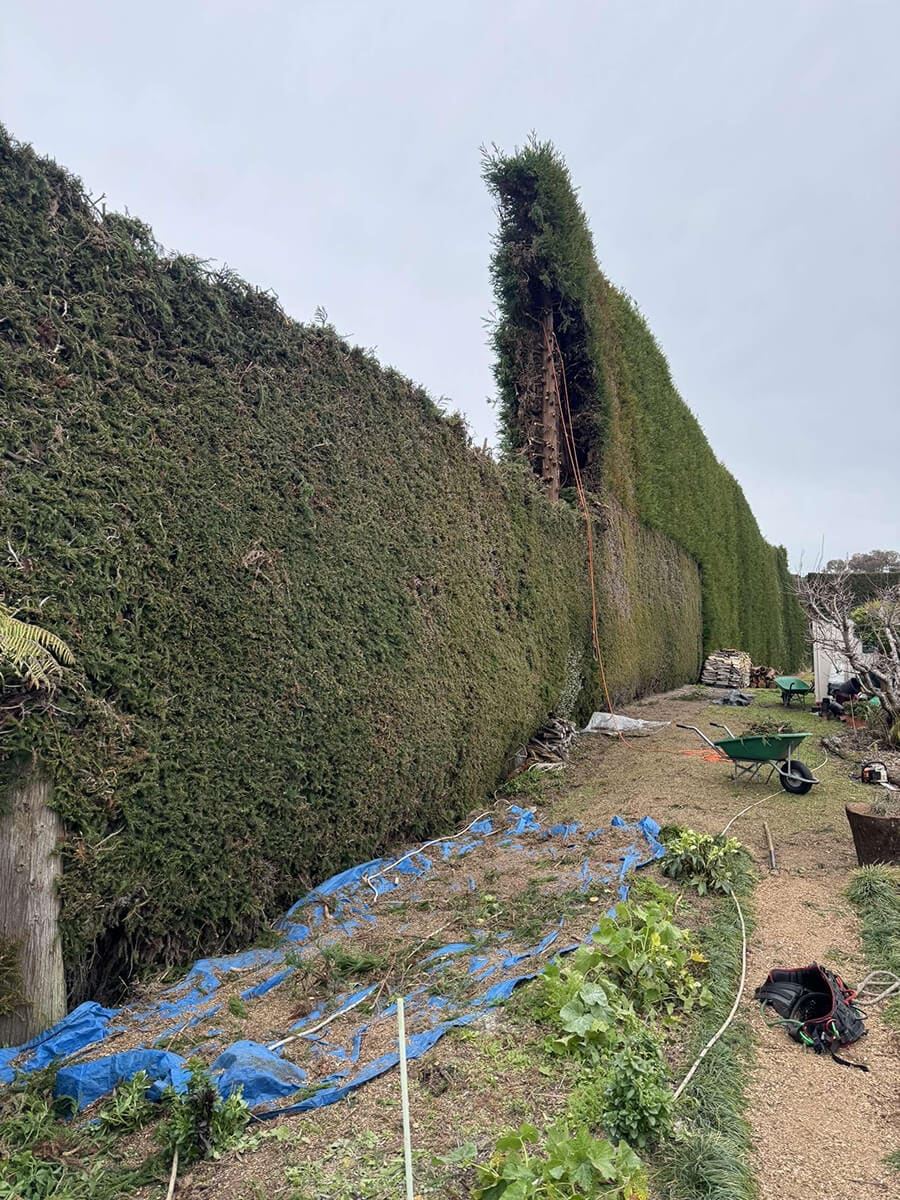
One block from above, three ways. The crew works each job the full length of the row.
Taken out
- Felled tree by tree, each sent where there’s room.
- Cut up where it lands, branches chipped on site.
Topped
- Tops off at the height you pick, end to end.
- Dropped to the clear side, away from the vines.
Lifted, with a gap
- Low limbs off with pole saws and chainsaws.
- A gap cut where you need a way through.
When the row has to go
Rows come out to make room for new canopy or cloth shelter, or because they’re shading the vines next to them.
Shelterbelts can shade neighbouring vines by as much as half, and vines next to a shelter row yield less. Some orchardists have taken rows out, or swapped them for windbreak cloth, to cut that shade.
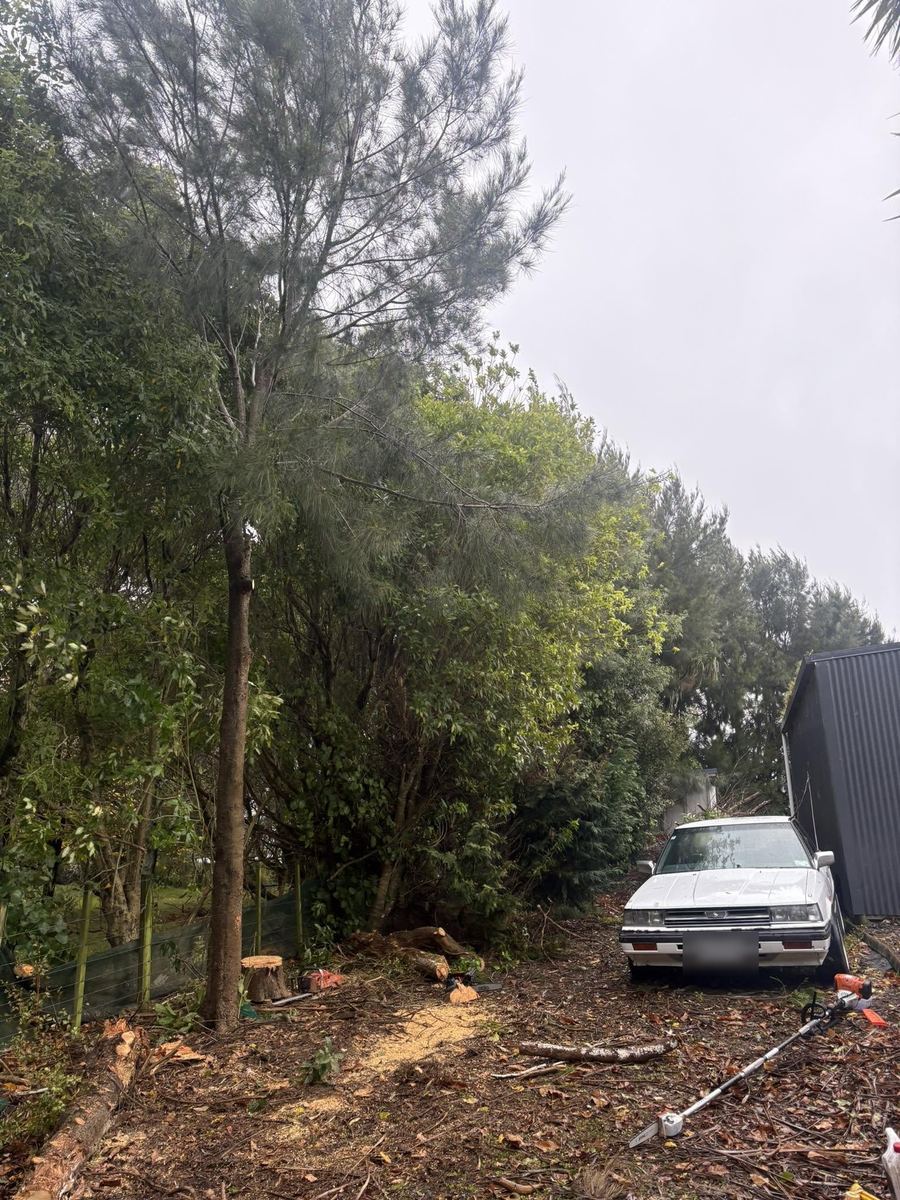
We take a row out one tree at a time. Each is felled with a directional cut, with ropes and wedges where it must go one way, then cut up where it lands and the branches chipped.
- 12 large shelterbelt trees felled beside a shed and a parked car
- Directional cuts, ropes and wedges
- Cut up, chipped and cleared
I would like to thanks James and the crew from Bay of Plenty tree services for the amazing job they did on our property, the price was great and the quality was even better!! I highly recommend them for any tree work needs.
Taking the tops off
A row that’s grown away takes light, water and food from the vines beside it, and needs regular trimming to keep in shape.
Topping brings the whole row down to a height you choose. You keep the shelter and get the light back.
Kiwifruit shelter works best at 5 m or more, set across the wind and unbroken, because wind speeds up through gaps.
Avocado growers are told to keep their trees in proportion to their shelter, since wind is one of the biggest causes of downgraded fruit. So we top to the height you pick, still standing clear above the trees it shelters.
Lifting the bottom, opening a gap
Lifting takes the low limbs off so tractors, bins and mowers get along the row, and cold air drains out of the block. On a downhill row, growers take the lowest metre off so frost doesn’t pool behind it.
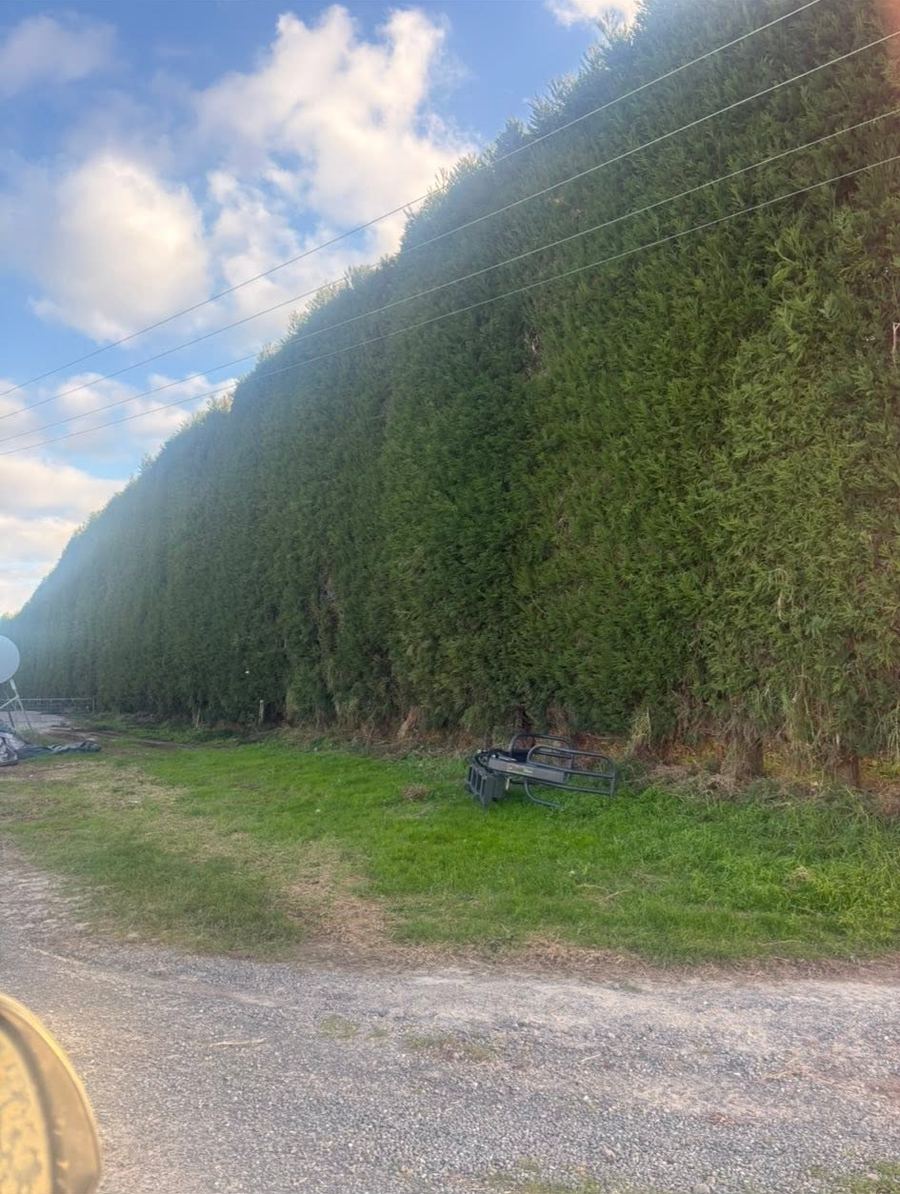
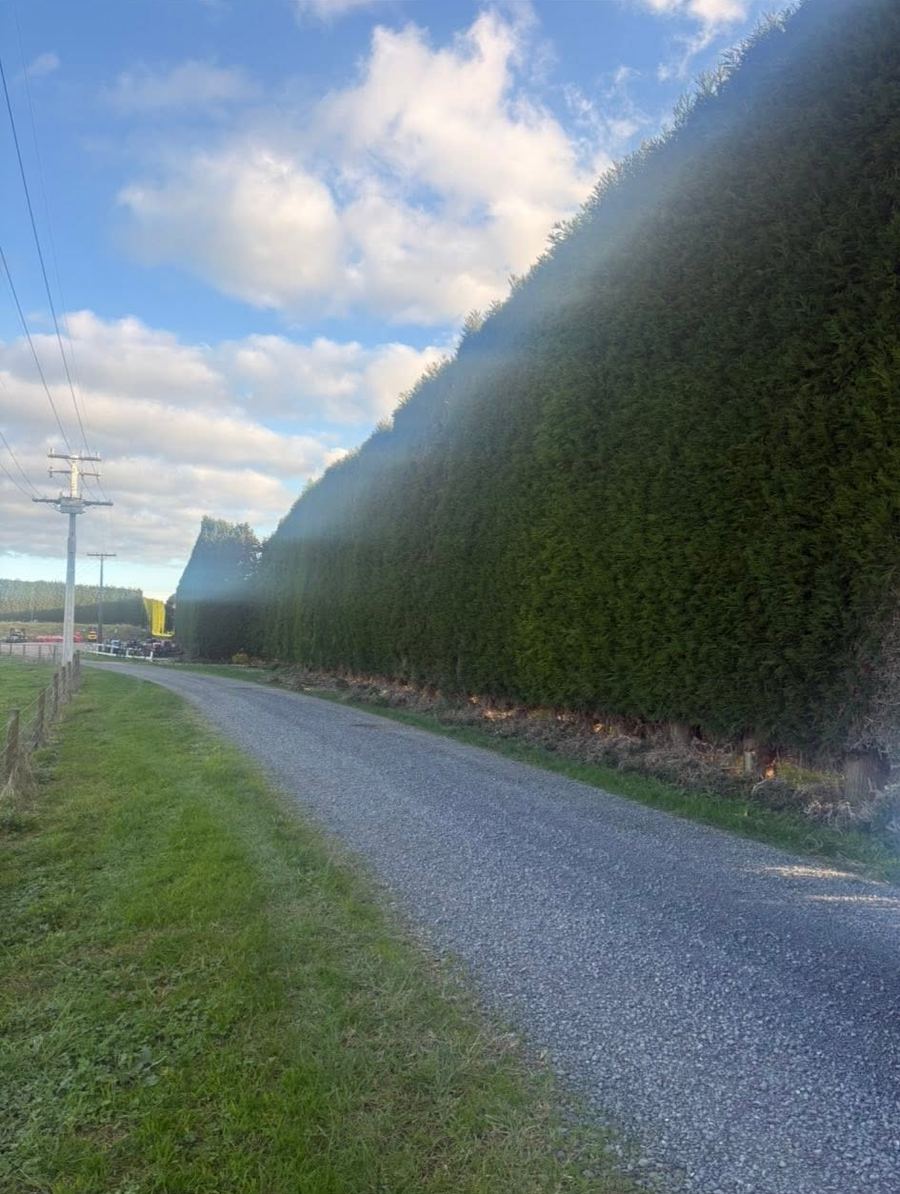
On one job the crew lifted a long, tall, dense row by about a metre, the full length, with pole saws and chainsaws. The debris stayed off the road and the power lines beside it.
A gap is the same work, deeper. It gives the bins or a new track a way through, cut clean and tidied on both faces.
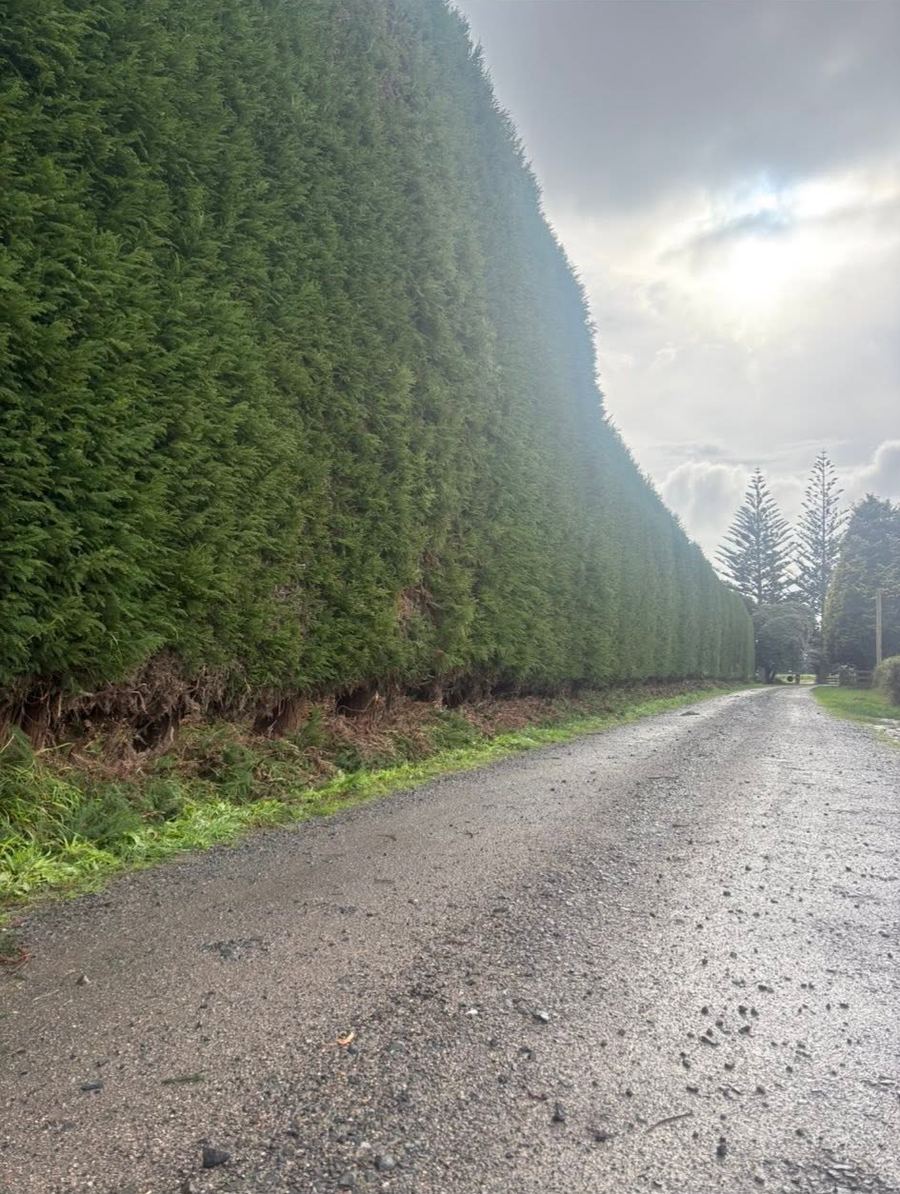
Road-front rows under the lines
Plenty of western Bay rows run along a road, under Powerco lines. Only Powerco’s approved contractors work within 4 m of its lines, so the lines company makes them safe first. Then we work the row and keep the road clear.
Since July 2026 a lines company can also serve a treefall hazard notice on a tree up to 24 m beyond a line’s clearance zone, with 25 or 45 working days to have it removed.
On the road side, the council can require a tree overhanging the road to be removed, lowered or trimmed where it endangers the road or its traffic. Got a notice? Send it in with its deadline.
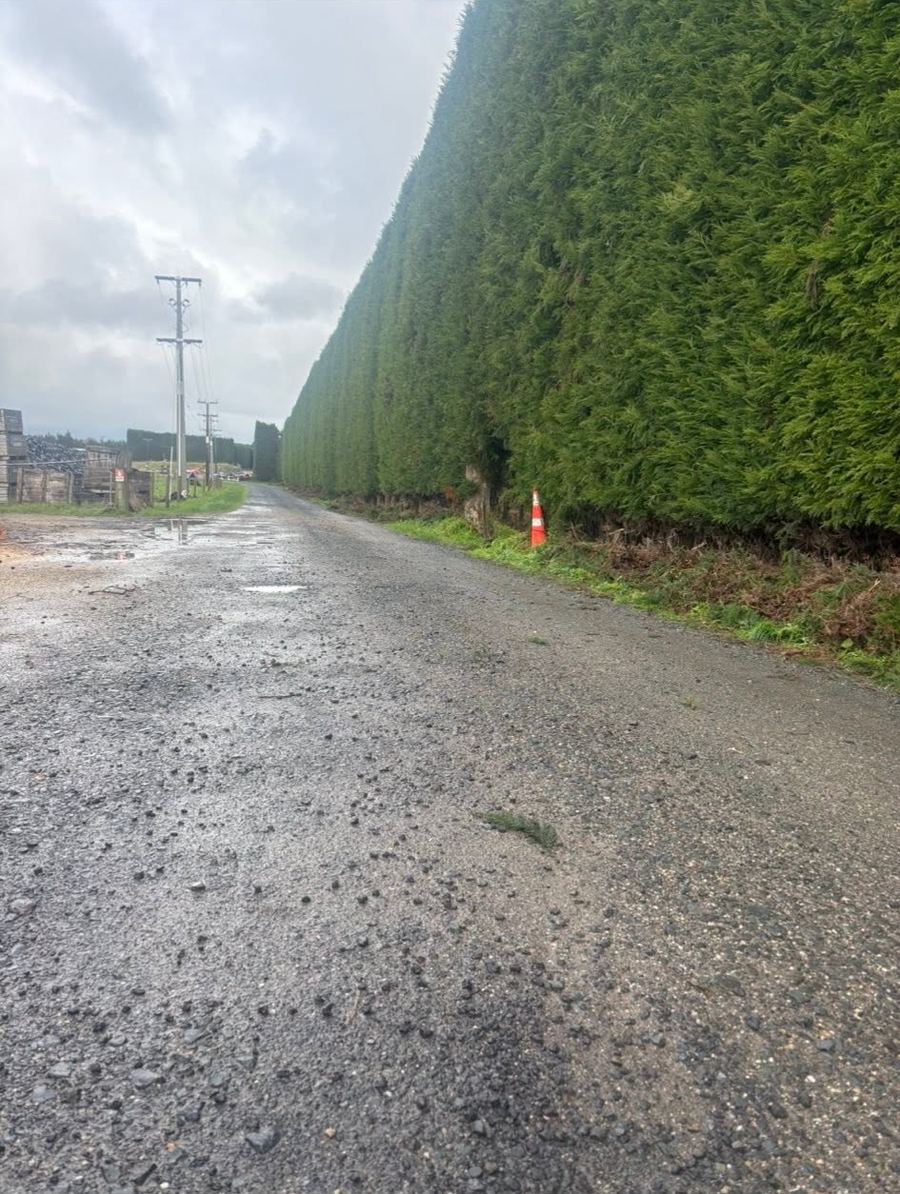
What’s growing in the rows
Japanese cedar and casuarina are the commonest orchard shelter trees now. Industry advice steers growers off poplar, which carries scale insects.
Older orchards are edged with Matsudana willow and black poplar hybrids, planted for fast shelter.
Farm windbreaks are pine and macrocarpa. Radiata gives about 50 years of useful shelter, and old pines left alone grow into huge multi-stemmed trees. Macrocarpa took the salt wind on coastal farms.
Whatever’s in your row, we take it down tree by tree to suit its size and lean.
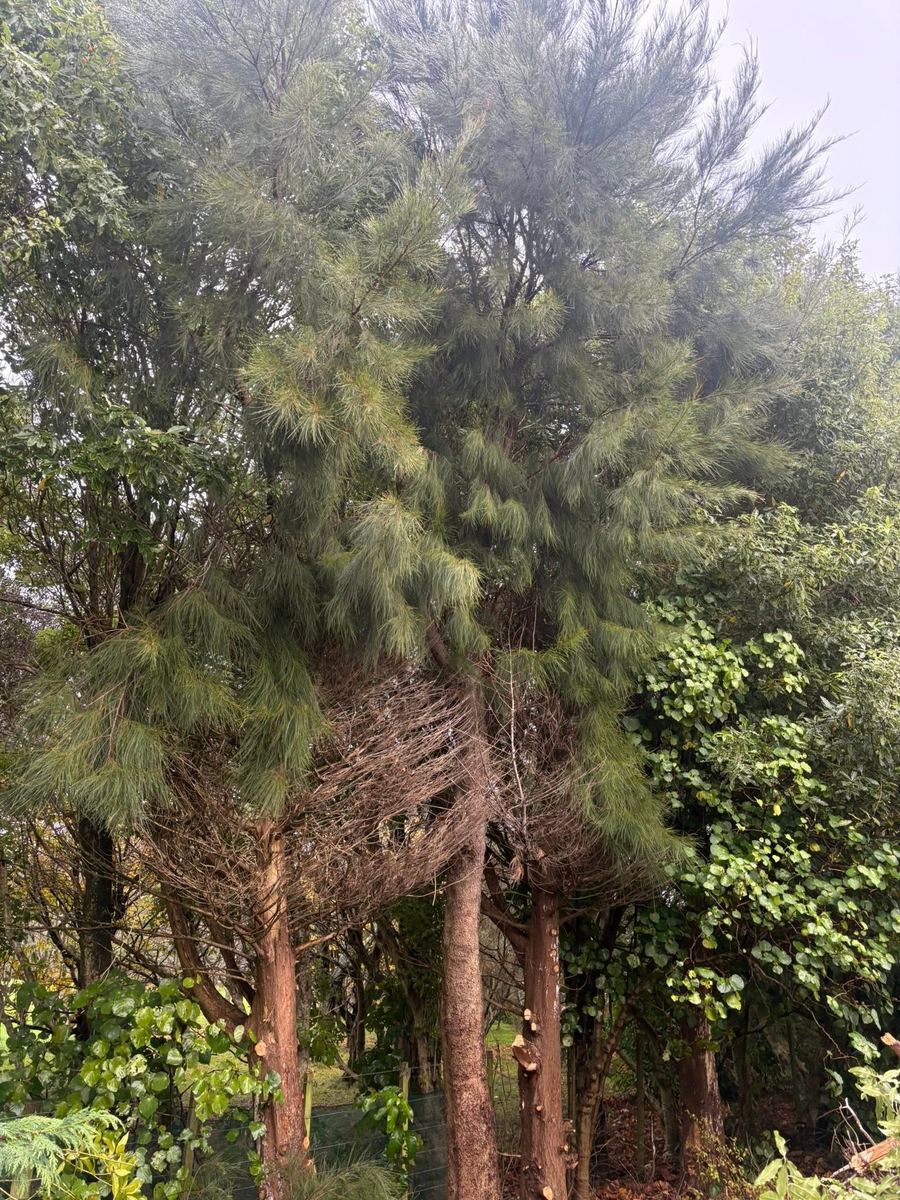
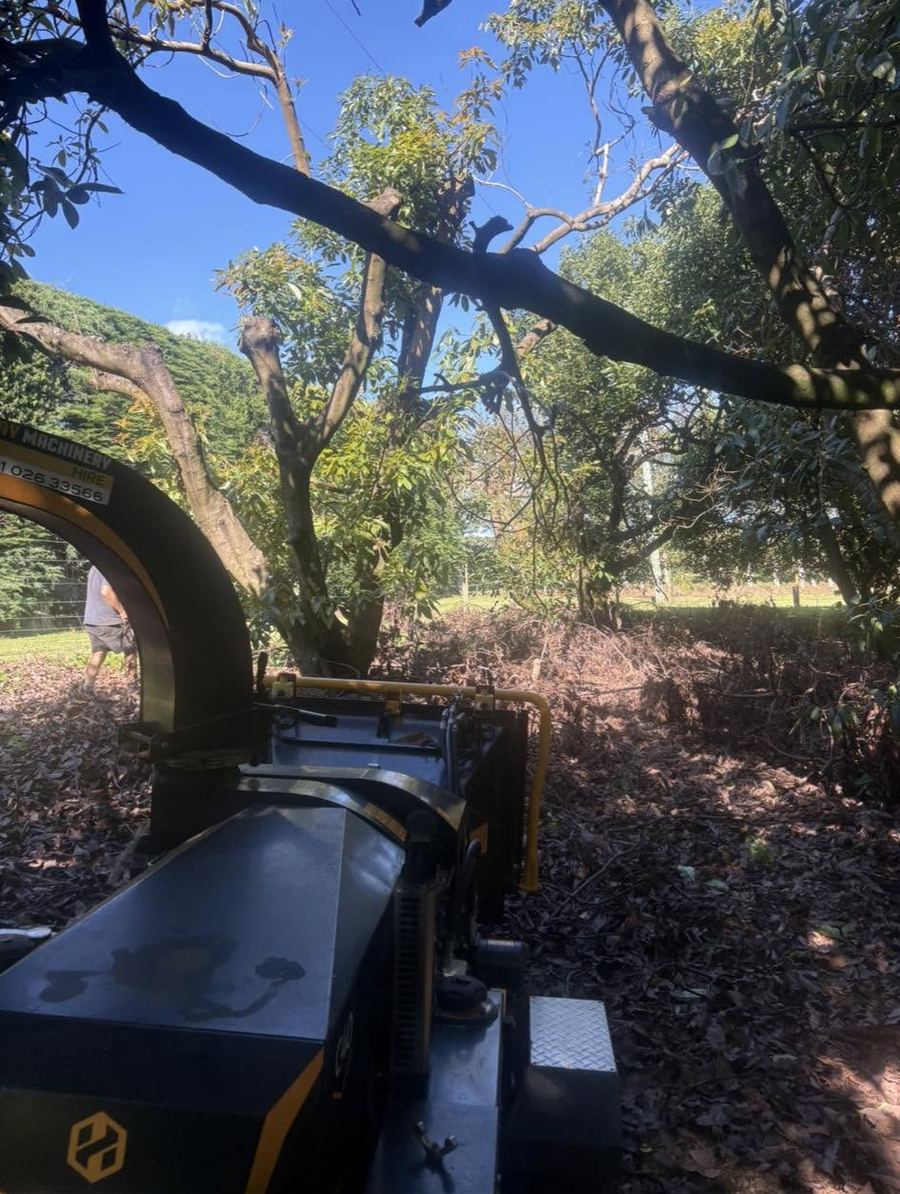
Chipping, firewood and picking time
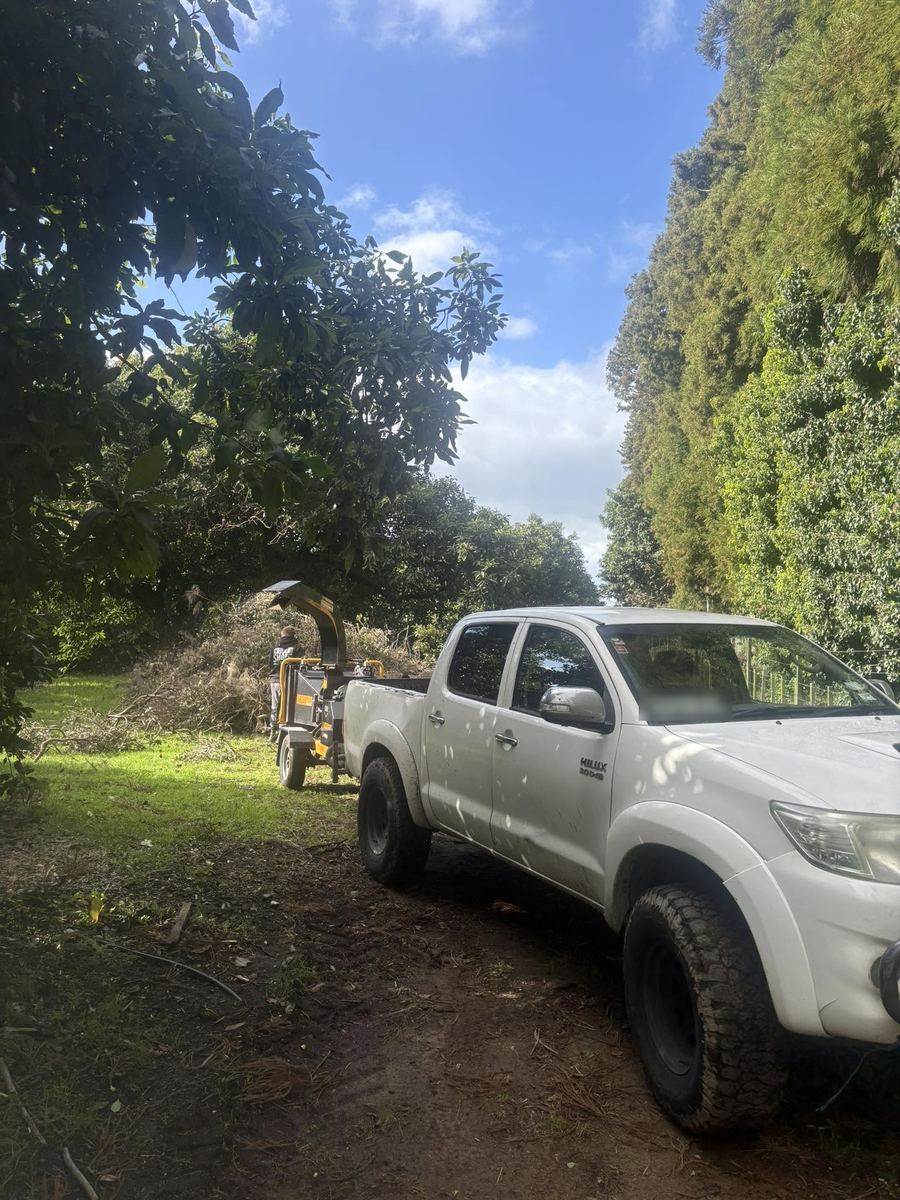
Branches are chipped on site and taken away. Trunks are cut to rounds, stacked for you if you want the firewood.
On one avocado orchard the crew spent three days mulching. It beats a burn pile, too, since an outdoor fire needs 100 m to the nearest neighbour’s house.
Kiwifruit picking runs from March to about mid-June, coastal blocks first. Send us your dates and we’ll work the row before or after.
JamesBay of Plenty Tree Service
- Qualifiedarborist, seven years on the tools
- Insuredfully, on every job
- Freesite visit and quote
- No travel chargeacross the western Bay
A Tauranga crew on your block
Our arborist, James, is qualified, and he’s been on the tools seven years. Home base is Tauranga.
The crew climbs, fells, chips and cleans up, and we’re fully insured. Site visit and quote are free anywhere from Maketū to Waihi.
Awesome service, great price and would definitely recommend and use for future work.
Pricing your row
We quote each row standing beside it, and the quote is free. It comes down to these.
- Length and height of the row
- Out, topped or lifted, and any gap cut
- What’s in it, and how big the old trees have got
- Canopy, a road and lines, or a neighbour alongside
- Chipped and taken away, or rounds left for firewood
Shelterbelt questions
Got another one? Ask it on the form and we’ll ring you about it, or ring 0800 166 033.
How tall should orchard shelter be?
Kiwifruit growers aim for at least 5 m, set across the wind and unbroken. Avocado growers keep their trees in proportion to their shelter. We top a row to whatever height you pick.
Can you lift the bottom of a row for frost?
Yes. Taking the lowest metre off a downhill row lets cold air drain out of the block instead of pooling behind it. We do the full length with pole saws and chainsaws.
Can you take out part of a row and leave the rest?
Yes. We cut a gap for access, or take out a stretch and leave the rest standing, tidied on both faces.
Do I need council consent to take out a shelterbelt?
In Western Bay’s rural zone the district plan sets no height limit or setback for shelterbelts. Its one shelterbelt cap is 5 m, on the Tuapiro rural-residential land. The rules that bite are for scheduled trees, scheduled bush and work near lines, so tell us if your row is close to any of them.
Will you work while we’re picking?
We work around it. Put your picking dates on the form and the row gets booked for before or after.
Get your row quoted
Tell us the length of the row and we’ll come and walk it with you. The quote is free.
What to tell James
- Your town, and where on the block the row or trees stand
- Out, topped or lifted, and roughly how far the row runs
- How tall it is, and the trees in it if you know them
- What runs alongside, whether canopy, a road under lines or a neighbour
- Photos of the row from one end, and of whatever is beside it
- Your picking dates, if the row shelters fruit
We ring you back, then come out and walk the row with you. Visit and quote are free.
Thanks, that’s with us.
James will ring to talk through the row or the trees, and fix a day to walk the block with you. To talk sooner, call 0800 166 033.